Software Won’t Win Elections. But Bad Systems Can Make Winning Harder.
What connected infrastructure could contribute to California politics, what success would look like, and what software cannot promise.
California has people who care and want to help. Political organizations can still lose them between “I want to help” and “Here is the next useful thing you can do.”
Software cannot create trust, a good candidate, or a strong message. But it can make it easier for the people doing the real work to find each other and move together.
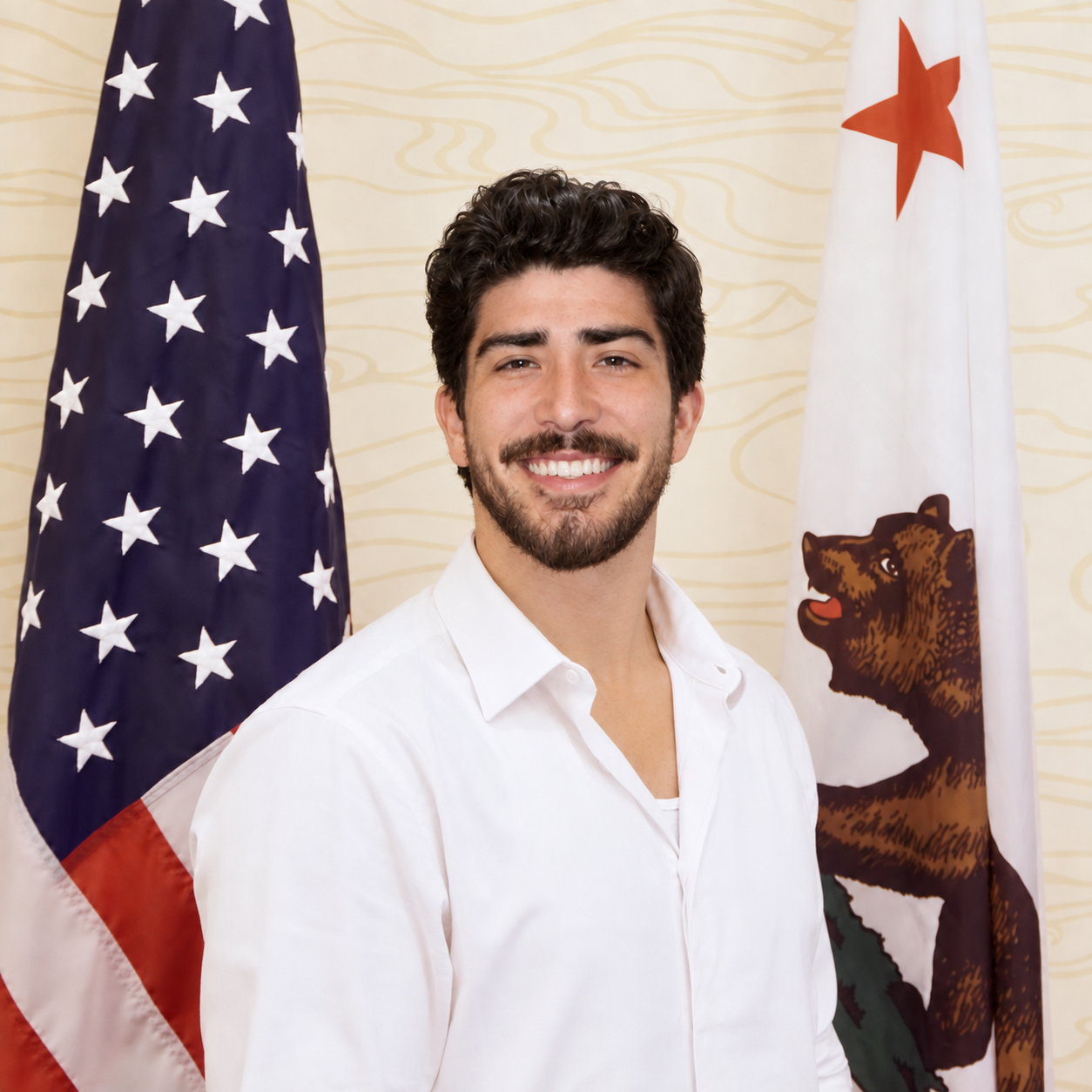
I’m Tim Yslava. My work on the California Young Republican Federation’s website is part of a bigger infrastructure vision. The public website is real. CAYRF has approved the statewide infrastructure roadmap as of October 19; the connected statewide system still needs implementation and verification. This article considers the potential of that approved direction.
CAYRF has a real role
CAYRF serves Republicans ages 18–40 through local chapters and work that includes leadership development, voter registration, endorsements, and getting voters to the polls. It is a place to build friendships, but it also has responsibilities that reach beyond the next social event.
The California Republican Party’s April 2026 bylaws identify CAYRF as a permanently chartered volunteer organization and provide representation in party governance. They also tie additional volunteer-organization delegate appointments to qualifying Republican voter registrations under the applicable rules.
That gives recruitment, registration records, chapter coordination, and leadership development real institutional importance. It does not mean our proposed system has generated registrations, delegates, or election results. It means the organization already has a place in the political system where better operations could matter.
California makes wasted effort expensive
As of September 4, 2026, California had 23,164,977 registered voters. Of those, 5,747,193 were registered Republicans: 24.81% of the total. Those figures come from the California Secretary of State’s registration report.
Republicans are not starting from a statewide registration majority. That makes it especially important to use people’s time well. An interested person who never gets a response, a volunteer who disappears after one election, and a chapter rebuilding the same process all represent lost opportunities.
Those statewide numbers are not a count of potential CAYRF members. They do not establish how many Republicans fall within ages 18–40. The state’s published age tables use age bands that do not exactly match that range. We should not invent a youth membership estimate by combining unrelated totals.
Shorten the distance from interest to action
Picture a person finding the website, locating a chapter, choosing what to receive, attending an event, and volunteering. Later, they might take on responsibility, learn to lead, and help welcome the next person. That is the participation chain we want to support.
Each step has a handoff. A chapter needs to receive the inquiry. Someone needs to follow up. The event information needs to be useful. A new volunteer needs a task and a person who can answer questions. None of this happens because a record exists in a database.
A connected system could make those handoffs clearer. It could help the right leader see an inquiry, remember the next step, and follow up consistently. That could contribute to more participation. It cannot guarantee that anyone attends, volunteers, or stays involved.
The real question is whether we make it easier for someone willing to help to do something useful. A smooth signup followed by silence is still silence. The work after the form matters more than the form.
Keep people involved after the first event
Getting someone through the door is only the beginning. A useful organization gives people reasons to return and responsibilities they can grow into. Local leaders do that work by building relationships, explaining opportunities, and noticing who is ready for the next step.
Better records could support those leaders. With the right permission and access, they could know whether someone attended before, expressed a volunteer interest, or needs a follow-up. That is a prompt for a human conversation, not permission to treat every person as an endlessly reusable campaign contact.
Leadership development takes practice: organizing a meeting, managing volunteers, solving a problem, and keeping a commitment. Tools can help track opportunities and continuity. They cannot manufacture good judgment. A stronger pipeline would be measured by people taking responsibility and staying involved, not by how impressive the dashboard looks.
The next team should not start from zero
Political organizations face officer turnover, volunteer turnover, campaign turnover, and election cycles. Someone can know how everything works today and leave next year. If the process lives only in that person’s head, the next team has to rebuild it.
A connected system could preserve appropriate event history, volunteer activity, decisions, operating procedures, and training. The next officer could understand what worked, what was promised, and what still needs attention. That would save time and make commitments easier to keep.
Preserving knowledge does not mean preserving everyone’s access forever. Officer changes should trigger a clear handoff: grant the successor the access their role needs, remove the predecessor’s unnecessary access, and retain only the records allowed under policy. Continuity and accountability should improve together.
The biggest impact might not come from a single election. It might come from keeping useful knowledge alive between elections, so each group of leaders can build on the work before them.
The network effect has to work both ways
Here is the nerdy part: every participating chapter could make the network more useful. More accurate chapter information improves routing. More events create more opportunities. Better follow-up creates a clearer path for people to stay involved.
But the value has to flow back to chapters. If information only moves up to the state organization while local leaders get more work and less control, participation will suffer. Fewer chapters means weaker information and fewer useful connections. The network effect can run backward.
CAYRF’s published directory lists 17 local or regional chapters, not 58 county chapters. A statewide website does not establish that every county has an active chapter or that every existing chapter has joined the proposed system. Coverage should be described honestly and improved through real participation.
The state organization already has access to membership at the state level. Connecting that foundation with participating local workflows could make approved coordination more dependable. It should also make each participating chapter more capable. That is how the network earns the right to grow.
Better campaign support still needs boundaries
Approved campaigns could benefit from a clearer way to request help, identify permitted audiences, and coordinate volunteer opportunities. Less time tracking down separate contacts could leave more time for actual organizing. That is a possible benefit, not access we are announcing today.
Campaign support requires decisions about who approves requests, what people agreed to receive, whether information may be shared, who sends communications, and when approval ends. A voter-file integration is not announced here. It would require its own explicit decision and review.
Email, text messaging, privacy, campaign finance, disclosures, and data sharing need legal and compliance review before operating promises. An approved send and an unrestricted data export are different things. The system should make those boundaries easier to respect rather than quietly removing them.
Three ways this could play out
The best case starts with a small pilot that helps willing chapters immediately. People reach the right chapter. Follow-up improves. Local leaders save time. The state coordinates approved work more clearly. Other chapters see useful results and choose to participate. Growth follows trust.
The realistic middle is a hybrid network. Some chapters adopt the shared system fully. Others use the website or event tools while keeping existing software. Some connect later. That can still be useful if responsibilities and permitted exchanges are clear. Perfect uniformity is not the standard.
The failure case is easy to imagine: centralize information before earning trust, treat old lists as permission, grant too much access, promise too much from AI, or build tools chapters do not want. A security incident could make all of those problems worse. We would have created another system people avoid.
We should talk about all three possibilities. Ambition is more credible when it includes a practical way to learn, a limited pilot, and a willingness to fix what fails before expanding.
Success is movement, not database size
I would measure the time from signup to chapter contact, routing accuracy, event attendance, first-event to second-event retention, repeat volunteering, and progress into leadership responsibility. Those measures show whether people move forward. A giant list by itself does not.
We should also track chapter adoption and response time, traceable permission, duplicate rates, delivery failures, unsubscribes, complaints, security incidents, and access removed after leadership changes. For approved campaign requests, measure the time to execution and whether the process followed its rules. Compare against a baseline before claiming improvement.
Election outcomes need more humility. Candidates, messages, resources, opponents, national conditions, and local relationships all matter. Better infrastructure could contribute to campaign capacity. We should not claim it caused persuasion, donations, turnout, endorsements, nominations, or victories without evidence. This project has not established those results.
People still do the work
My approach comes from connecting real people, data, and workflows inside my family’s service business. At Masterline, building MIQ has meant paying attention to how work moves and where it gets stuck. I am applying those common-sense lessons here, with the different responsibilities of a political federation firmly in view.
People knock on doors, make calls, earn trust, persuade neighbors, volunteer, and run for office. They should have dependable tools behind them. The companion article explains how the proposed system would actually work, including chapter control, permission, rollout, and where AI could help later.
We are trying to build a better way for people to find each other, organize, lead, and keep moving from one election cycle to the next. If you want a practical place to begin, learn about CAYRF and find your local club. The next useful step belongs to people.